




What are 5ml syringes used for?
 Oct 09, 2026|
 View:2239
A 5 mL syringe is a practical tool for measuring, drawing up, and transferring small volumes of liquid. It is used in healthcare, laboratory work, veterinary care, and selected industrial applications. However, not every 5 mL syringe is designed for the same task. Its tip configuration, graduation markings, materials, sterility, and intended use determine which applications are appropriate.
Understanding what 5 mL syringes are used for helps healthcare professionals, laboratory personnel, distributors, and purchasing teams choose the correct product. This guide explains their main applications, compares common syringe types, and outlines the factors to check before selecting a 5 mL syringe.

Key Takeaways
A 5 mL syringe has a nominal capacity of 5 milliliters and can be used for appropriate small-volume measurement and liquid transfer tasks.
Medical applications may include administering prescribed liquid medication, drawing up medication, or other procedures when the syringe is designed and specified for that purpose.
Laboratory and industrial applications can include transferring reagents, dispensing compatible liquids, and applying small amounts of adhesives or lubricants.
Luer Lock, Luer Slip, oral, and enteral syringes have different connection designs and intended uses. They should not be treated as interchangeable.
Capacity, graduation scale, material compatibility, sterility, packaging, and single-use instructions should be checked before selection.
1. What Is a 5 mL Syringe?
A 5 mL syringe is a syringe with a nominal capacity of 5 milliliters. Its main components generally include a barrel, plunger, graduated scale, and tip or connector. Depending on the model, it may be supplied with a needle, without a needle, or with a specialized connector for a particular application.
The barrel holds the liquid, while the plunger moves to draw liquid into the syringe or expel it. Graduation markings help users determine the volume contained in the barrel. The smallest graduation interval varies by model, so the scale must be checked rather than assumed.
Common Types of 5 mL Syringes
Luer Lock syringe: Uses a threaded locking collar to attach a compatible needle or connector.
Luer Slip syringe: Uses a compatible push-fit connection without a threaded locking collar.
Oral syringe: Designed for administering liquid medicine by mouth, according to the product instructions.
Enteral feeding syringe: Designed for use with compatible enteral feeding systems and connectors.
Special-purpose syringe: May have a particular tip, material, or configuration for a specified application.
2. What Are 5 mL Syringes Used For?
2.1 Medical and Healthcare Applications
In healthcare, 5 mL syringes can be used for selected medication measurement, liquid transfer, and clinical procedures. The appropriate design depends on the route of administration, connector requirements, and the instructions for the medication or medical device.
Medication Measurement and Administration
A 5 mL oral syringe can be used to measure and administer a prescribed volume of liquid medicine by mouth when it is suitable for the medicine and patient. Clear graduations help caregivers and healthcare professionals measure the instructed dose.
For injectable medication, the syringe must be designed for injection and used according to the applicable clinical instructions. An oral syringe must not be substituted for an injection syringe, and an injection syringe should not automatically be considered suitable for oral use.
The appropriate syringe size also matters when measuring small volumes. A 5 mL syringe is not automatically the most suitable option for every dose below 5 mL. The graduation scale, required measurement resolution, and device instructions should guide selection. Further information is available in the guidance on measuring liquid medicines with an oral syringe.
Wound Irrigation and Clinical Fluid Handling
Syringes may be used in wound irrigation and other clinical fluid-handling procedures when the product is specifically suitable for the task. The required syringe capacity, tip design, fluid, and application technique depend on the procedure and professional instructions.
Not every 5 mL syringe is intended for wound irrigation. Healthcare personnel should select a compatible product and follow the relevant clinical protocol rather than assuming that a standard injection syringe is appropriate.
Feeding Tube and Enteral Applications
A syringe may be used to administer prescribed liquids through an enteral feeding tube if it is designed for that connection and use. An enteral syringe with a compatible connector should be selected according to the feeding system's instructions.
A conventional Luer connector should not be assumed to be compatible with an enteral feeding system. Connector compatibility is important to help prevent misconnections and support the intended use of the device.
2.2 Laboratory and Research Applications
In laboratories, a 5 mL syringe can be used to draw up, transfer, or dispense small quantities of compatible liquids. Examples include selected reagents, sample solutions, inks, and other laboratory fluids. The syringe must be compatible with the chemical and the required measurement accuracy.
Reagent Measurement and Liquid Transfer
A syringe may be convenient for transferring a small volume from a container or dispensing a liquid into a test vessel. For quantitative laboratory work, the syringe's graduation scale and documented measurement performance should be suitable for the method. A standard syringe should not be assumed to provide the same accuracy as calibrated volumetric laboratory equipment.
Chromatography and Titration Preparation
Some laboratory workflows use syringes to transfer samples or prepare solutions for analytical procedures. However, the required syringe type depends on the instrument, sample, and method. Chromatography systems may require a specific injection syringe or sampling accessory rather than a general-purpose 5 mL syringe.
2.3 Veterinary Applications
In veterinary settings, a suitable 5 mL syringe may be used to measure or administer medication to animals under veterinary direction. The correct syringe and accessory depend on the medication, species, prescribed dose, route of administration, and product instructions.
Oral medication: Use a syringe designed for oral administration when the treatment is prescribed by mouth.
Injectable medication: Use a syringe and needle appropriate for the medication and the prescribed injection route.
Livestock care: Product capacity and needle configuration should be selected by qualified personnel according to veterinary instructions.
Needle gauge and length should not be chosen solely on the basis of syringe capacity. Veterinary professionals should determine the suitable needle and administration method for the animal and medication.
2.4 Industrial and DIY Applications
Outside medical settings, a 5 mL syringe may serve as a small-volume dispensing tool for compatible industrial liquids and materials. It can be useful when a controlled amount needs to be applied to a specific location.
Lubricants, Adhesives, and Sealants
Depending on the material and syringe construction, a syringe may be used to dispense small quantities of oil, grease, adhesive, or sealant during maintenance and craft work. The material compatibility of the barrel, plunger, gasket, and tip should be checked before use.
Products designed for medical use are not automatically suitable for industrial chemicals. Certain solvents, oils, and adhesives may damage syringe components or cause leakage. A compatible dispensing tool should be selected for the material being handled.
Electronics Repair
Small-volume dispensing tools can help apply compatible soldering flux, conductive paint, or other repair materials to specific areas of an electronic assembly. The dispensing tip and material compatibility should match the task, and a syringe used with industrial chemicals should not later be used for medical purposes.
2.5 Household, Gardening, and Creative Projects
In non-medical settings, a 5 mL syringe may be used to measure or dispense small amounts of suitable liquids for crafts, household projects, and gardening tasks.
Arts and crafts: Dispensing small amounts of compatible dyes, pigments, or resin components where the material and syringe are suitable.
Cooking and baking: Measuring small quantities of food ingredients only with a clean, food-safe tool specifically suitable for food contact.
Gardening: Measuring liquid fertilizers or other products according to their labels, using a dedicated compatible tool.
A syringe used with pesticides, fertilizers, adhesives, or other chemicals should be dedicated to that purpose and clearly separated from medical, food, and household medicine tools. Pesticides must be handled and applied according to their product labels and applicable regulations.
3. How to Choose the Right 5 mL Syringe
The correct 5 mL syringe depends on its intended application, required measurement resolution, connector design, materials, and packaging. Medical buyers should also verify sterility and regulatory documentation where applicable.
3.1 Check the Material
Polypropylene (PP) is used in many disposable syringe barrels. Other materials, including polycarbonate in certain products, may be used depending on the design and intended application. Material selection should be based on documented compatibility with the liquid, temperature, contact conditions, and relevant product requirements.
Chemical resistance should not be inferred from the material name alone. Compatibility depends on the particular formulation, concentration, exposure time, and syringe components, including the plunger seal and lubricant.
3.2 Select the Correct Tip and Connector
The syringe tip determines which accessories can be attached. A Luer Lock connection provides a threaded locking feature, while a Luer Slip connection relies on a push-fit. Oral and enteral syringes may use different tip or connector designs.
The connection must match the intended accessory and application. A syringe should not be modified or connected to an incompatible device in an attempt to make it fit.
3.3 Review Sterility and Intended Use
For medical applications, confirm whether the syringe is supplied sterile and whether it is labeled for single use. Review the package integrity, labeling, lot identification, storage conditions, and shelf life as applicable.
A single-use syringe must not be reused between patients. Reusing disposable syringes or needles can introduce contamination and infection risks. Used needles should be placed in an appropriate sharps disposal container in accordance with local requirements.
3.4 Check Graduation Markings and Measurement Requirements
The graduation interval is an important consideration when measuring small volumes. Two syringes with the same nominal capacity may have different scale intervals or measurement characteristics.
For accurate measurement, users should select a syringe whose capacity and graduation scale are appropriate for the required volume. Research on syringe measurement indicates that measurement performance can vary with the proportion of capacity being measured, syringe design, and user technique. The required accuracy should therefore be checked against the product specification and intended procedure.
3.5 Verify Packaging and Documentation
For healthcare procurement, confirm the packaging configuration, sterilization information where applicable, product identifiers, and required regulatory documents. Distributors and importers should verify that the documentation applies to the exact product and target market.
| Selection Factor | What to Check |
|---|---|
| Nominal capacity | Whether 5 mL is appropriate for the intended volume and measurement task |
| Graduation scale | Scale intervals, readability, and suitability for the required measurement resolution |
| Tip and connector | Luer Lock, Luer Slip, oral, enteral, or another specified configuration |
| Materials | Barrel, plunger, gasket, tip, and compatibility with the liquid being handled |
| Sterility | Sterile status, sterilization documentation where applicable, and package integrity |
| Packaging | Individual or bulk packaging, labeling, storage conditions, and shelf life |
| Supplier documentation | Product specifications, applicable certificates, traceability, and market requirements |
Review the intended application, connector type, needle requirements, packaging, and target market before requesting a product quotation.
Contact Us4. 5 mL Luer Lock Syringe Options from Holinx
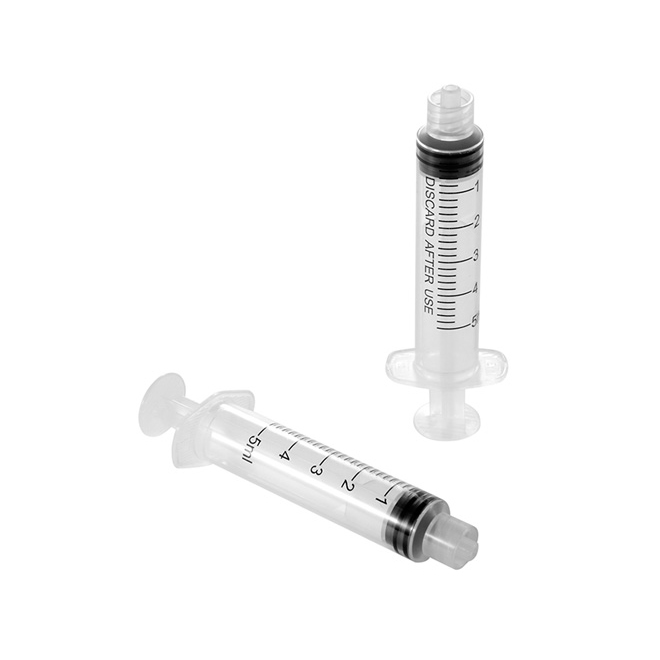
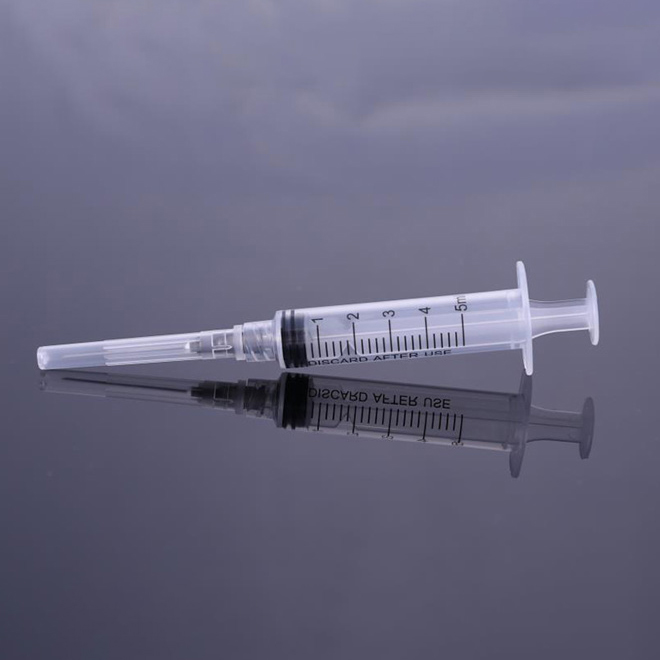
Holinx lists 5 mL Luer Lock syringe models with and without needles. The product page identifies a transparent polypropylene barrel and lists other product components and packaging information. The exact needle configuration, materials, sterilization details, and available options should be confirmed against the selected product specification before purchase.
For applications that require a syringe without a supplied needle, Holinx also lists a separate 5 mL Luer Lock syringe configuration. Buyers should choose between the two models based on the required setup and verified product specifications.
Contact Holinx with the required capacity, needle configuration, packaging, target market, and estimated order quantity to discuss the available options.
Get a Quote5. Safety Tips When Using 5 mL Syringes
Use the correct syringe: Confirm that the product is designed for the intended route of administration or non-medical application.
Follow the instructions: Use the syringe according to its labeling, the medication instructions, or the applicable professional procedure.
Do not reuse single-use medical syringes: Use a new sterile syringe and needle for each patient as required by safe injection practices.
Dispose of sharps correctly: Place used needles and other sharps in an appropriate sharps container.
Prevent cross-contamination: Keep tools used for chemicals, industrial materials, food, and medical purposes separate.
Check the packaging: Do not use a sterile medical product if its packaging is damaged or its integrity cannot be confirmed.
For additional information, review the clinical recommendations for safe injection practices. These recommendations are relevant to preventing contamination and infection when using injection equipment.
Conclusion
A 5 mL syringe is used to measure, draw up, transfer, or dispense small volumes of liquid in a range of settings. Common applications include selected medical procedures, laboratory liquid handling, veterinary care, industrial dispensing, and certain household or creative tasks. Its suitability depends on the syringe's design, connector, materials, graduation scale, and intended use.
When selecting a 5 mL syringe, buyers should check capacity, measurement requirements, tip configuration, material compatibility, sterility, packaging, and applicable product documentation. A syringe designed for one purpose should not automatically be used for another.
For medical supply distributors and professional buyers seeking a 5 mL Luer Lock Syringe, Holinx provides listed product options with and without needles. Reviewing the specific product information and confirming requirements with the supplier can help buyers identify a suitable configuration for their intended application.
Frequently Asked Questions
1. What are 5 mL syringes commonly used for?
Depending on their design, 5 mL syringes can be used for measuring liquid medication, selected clinical procedures, laboratory liquid transfer, veterinary applications, and compatible industrial dispensing tasks.
2. Can a 5 mL syringe be used for oral medication?
Yes, if it is an oral syringe suitable for the medication and intended use. An injection syringe should not automatically be substituted for an oral syringe. Follow the medication instructions and professional guidance.
3. Is a 5 mL syringe suitable for every dose below 5 mL?
No. The appropriate syringe depends on the required volume, graduation interval, measurement accuracy, and intended application. A smaller-capacity syringe may be more suitable for some small-volume measurements.
4. What is the difference between a 5 mL Luer Lock and a Luer Slip syringe?
A Luer Lock syringe uses a threaded collar to retain a compatible connector, while a Luer Slip syringe uses a push-fit connection. The correct choice depends on connector compatibility and the requirements of the intended procedure.
5. Are 5 mL disposable syringes reusable?
Single-use disposable medical syringes must not be reused. Follow the product labeling and applicable infection-prevention and disposal requirements.
6. What should buyers check before ordering 5 mL syringes?
Buyers should verify the syringe type, connector, graduation scale, needle configuration, materials, sterility, packaging, applicable documentation, minimum order quantity, and delivery requirements.
Recommended Products

Disposable Medical 5ml Enteral Feeding Syringe Enfit Syringe with Cap

Medical Disposable 1ml 3ml 5ml 10ml 20ml 35ml 60ml 100ml Enteral Feeding Enfit Syringe
0.5ml 1ml 2ml Injection Disposable Safety Sterile Injection Medical Insulin Syringe

5ml Low Dead Space Syringe with needle

5ml Two Parts Medical Disposable Syringe
5ml Luer Lock Syringe without Needle
5ml Luer Lock Syringe with Needle

5ml Disposable Luer Slip Syringe with Needle

5ml Luer Slip Medical Disposable Syringe without Needle