




What is the main function of a disposable syringe?
 Oct 23, 2026|
 View:1584
Disposable syringes play an important role in modern healthcare by allowing medical professionals to measure, draw up, transfer, and administer fluids when the syringe is designed for the intended procedure. Their single-use design also supports infection prevention by reducing the risk associated with reusing contaminated injection equipment.
However, a disposable syringe is not a universal tool for every medical task. Its capacity, graduation scale, connector, materials, sterility, and intended use determine whether it is appropriate for a particular application. Understanding these factors helps healthcare providers, medical distributors, and procurement teams choose the right product.
This guide explains the main functions of a disposable syringe, its common medical applications, how single-use equipment supports infection control, and what buyers should check when selecting a disposable syringe manufacturer.
Key Takeaways
Fluid measurement and delivery: A disposable syringe helps measure, draw up, transfer, or administer a specified volume of liquid according to its design.
Infection prevention: Using a new sterile syringe and needle for each patient and injection helps prevent cross-contamination and transmission of bloodborne pathogens.
Multiple applications: Disposable syringes are used in clinical care, selected laboratory procedures, and veterinary medicine when the product is appropriate for the task.
Product selection matters: Capacity, graduations, connector type, materials, sterility, and packaging should match the intended application.
Supplier verification: Medical buyers should review product specifications, applicable regulatory documentation, quality controls, and traceability before purchasing.
1. What Is a Disposable Syringe?
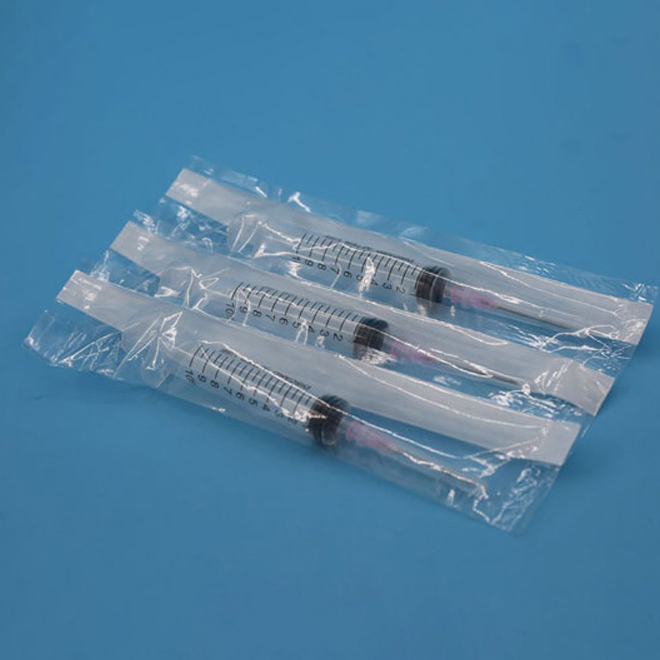
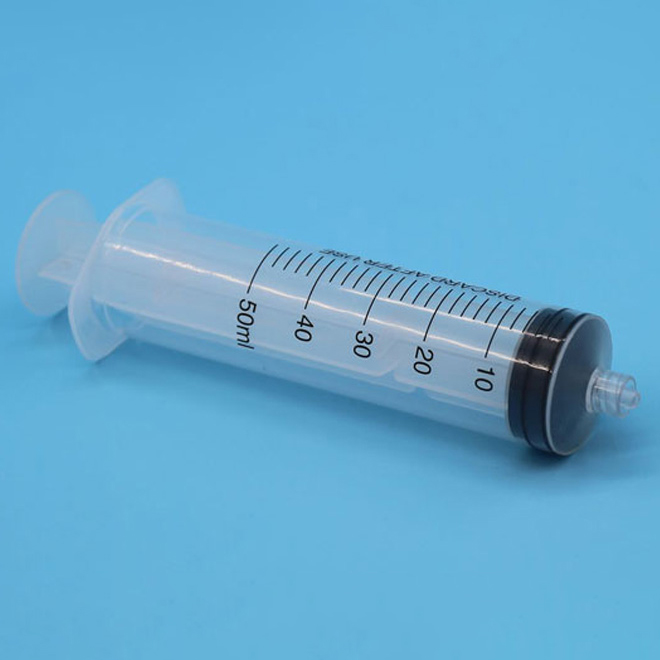
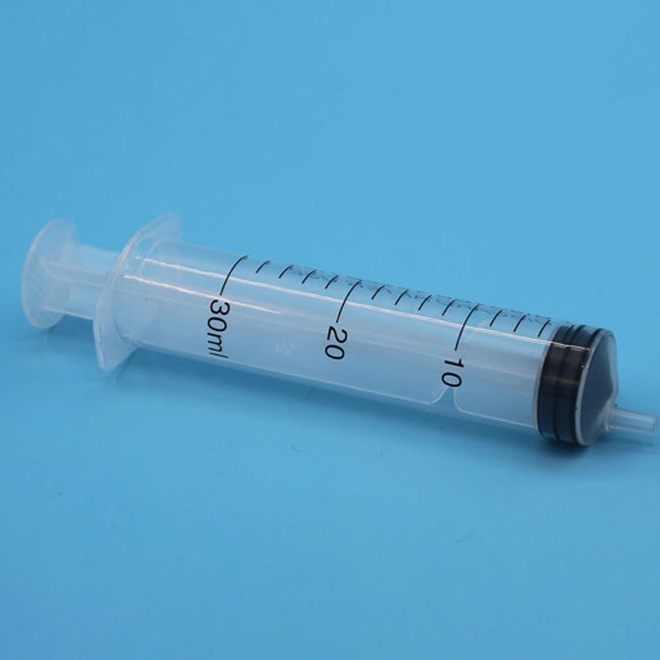
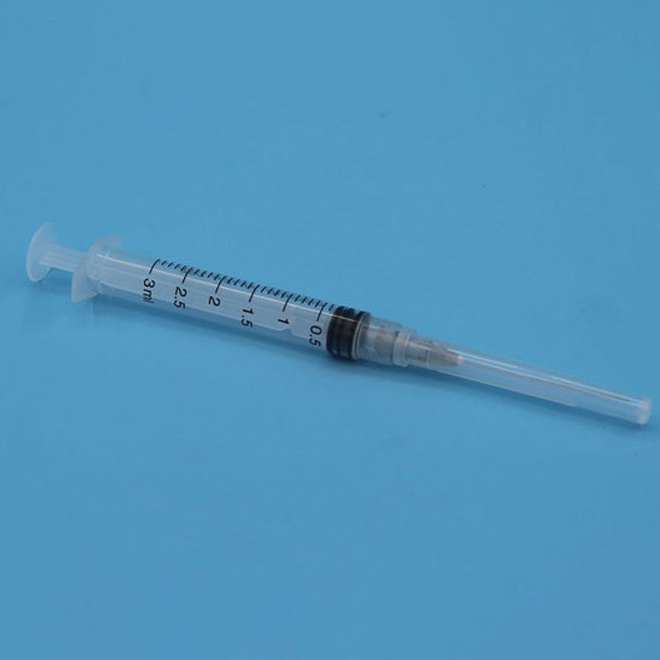
A disposable syringe is a device intended for one-time use or for a single procedure as specified by its labeling. A conventional syringe typically consists of a barrel, plunger, graduated scale, and tip or connector. Some models are supplied with a needle, while others are supplied without one or use a specialized connector.
The barrel holds the liquid, and the plunger moves within the barrel to draw in or expel the contents. Graduation markings help users read the volume. The actual measurement performance depends on the syringe design, scale, capacity, and correct technique.
Common Types of Disposable Syringes
Luer Lock syringe: Uses a threaded locking collar to attach a compatible needle or connector.
Luer Slip syringe: Uses a compatible push-fit connection rather than a threaded locking collar.
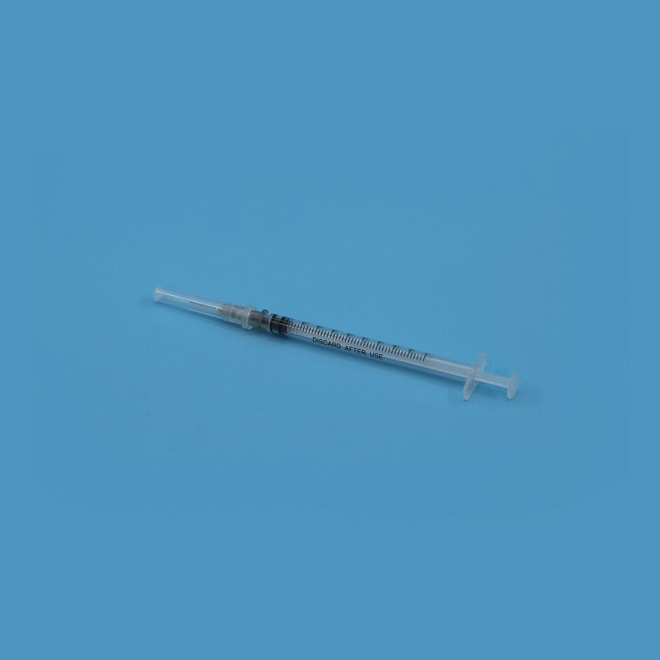
Insulin syringe: Designed for insulin administration, with a scale and capacity intended for the relevant insulin dosing system.
Oral syringe: Designed to measure and administer liquid medication by mouth.
Catheter or enteral syringe: Designed for compatible catheter-related or enteral applications according to the product instructions.
Low dead space syringe: Designed to reduce the volume of liquid retained in the syringe and connector after use.
Recommended Disposable Syringes
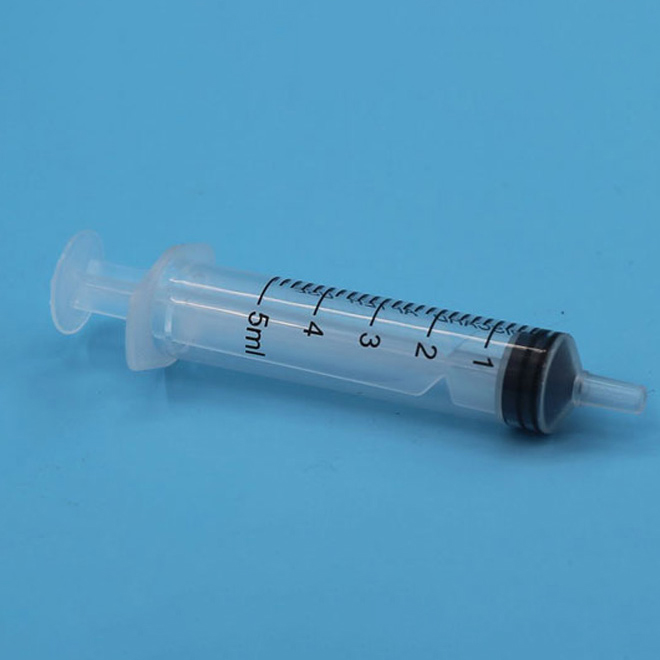
5 mL Disposable Syringe
A disposable syringe with a medical-grade polypropylene barrel and available latex or latex-free piston options. Confirm the connector, configuration, and packaging for the intended application.
10 mL Disposable Syringe
Available in Luer Slip and Luer Lock configurations, with two-part or three-part options and different packaging formats depending on the model.
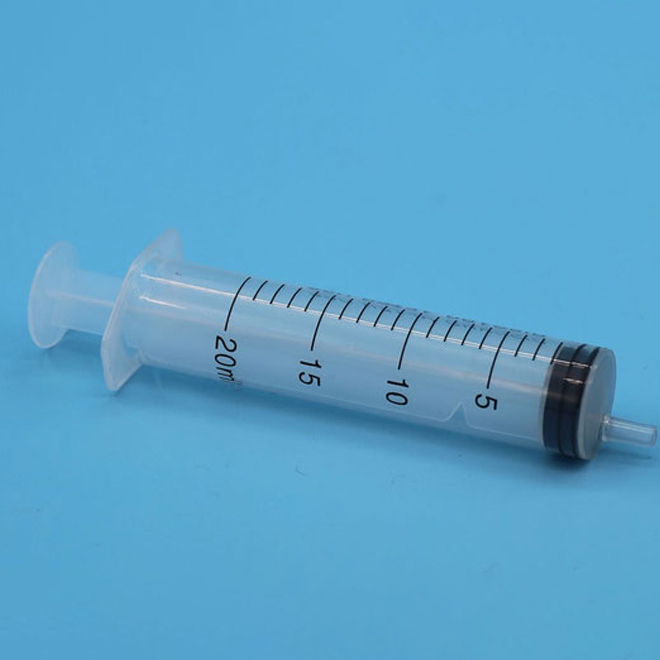
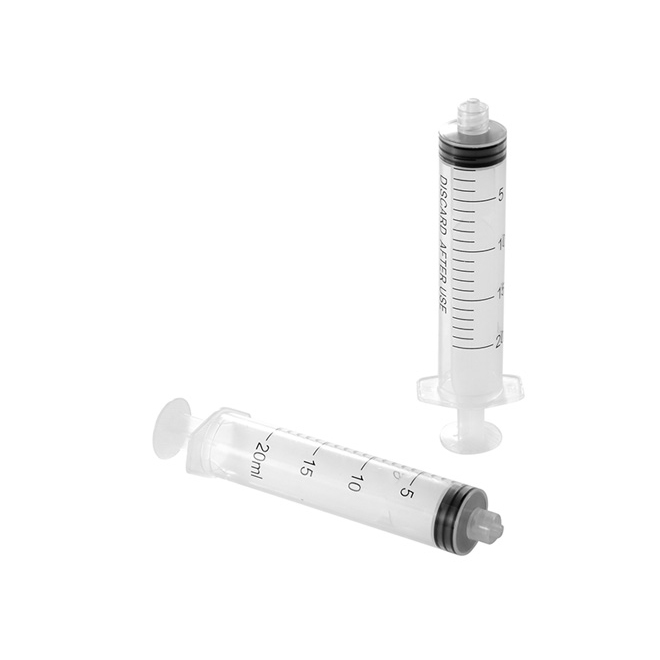
20 mL Disposable Syringe
Offered with options such as two-part construction and Luer Slip or Luer Lock connections. Check the product specification for the available configuration and individual packaging.
2. What Is the Main Function of a Disposable Syringe?
2.1 Measuring and Administering Medication
One of the primary functions of a disposable syringe is to measure and deliver a specified volume of medication. The graduated scale helps healthcare professionals draw up the required amount and administer it through the route for which the syringe is intended.
Syringes are used in different clinical settings for prescribed medications, vaccines, anesthetic agents, and other injectable preparations. The appropriate syringe depends on the medication, required volume, administration route, connector, and applicable clinical instructions.
Clear graduation markings support volume measurement, but they do not guarantee that every measurement will be accurate. The selected syringe must have a scale appropriate for the required dose, and the user must follow the prescribed instructions and proper technique.
2.2 Supporting Safe Injection Practices
Disposable syringes are intended to be discarded after their specified use rather than cleaned and reused between patients. When used with a new sterile needle for each patient and injection, they help reduce the risk of transferring bloodborne pathogens and other contaminants.
The US Centers for Disease Control and Prevention recommends using a new sterile syringe and needle for each patient and discarding both after use. Changing the needle alone does not make a previously used syringe safe for another patient.
Safe injection practices also require aseptic preparation, appropriate medication handling, and correct disposal. The single-use design of a syringe supports these practices but cannot independently prevent contamination if the equipment is handled incorrectly.
2.3 Drawing Up and Transferring Fluids
A disposable syringe can be used to draw liquid from a compatible container and transfer it to another suitable device or location. In healthcare, this function may support medication preparation and specified fluid-handling procedures.
Some procedures require a syringe without a needle or with a particular tip or connector. The selected configuration must match the receiving device and intended application. A general-purpose injection syringe should not automatically be used for catheter, enteral, or other specialized procedures.
2.4 Supporting Selected Diagnostic and Clinical Procedures
Syringes may be used as part of selected diagnostic or clinical workflows for drawing up or transferring fluids. However, a disposable syringe is not a complete blood collection or laboratory testing system by itself.
Blood collection requires equipment specifically suited to the procedure, such as an appropriate needle, collection device, and specimen container. The relevant clinical protocol determines whether a syringe-based method is suitable.
2.5 Applications in Veterinary Medicine
Disposable syringes are also used in veterinary settings to measure and administer prescribed medications and vaccines. The required capacity, needle, connector, and administration route depend on the animal, medication, and veterinary instructions.
Syringes intended for animal use should be selected according to the product labeling and the veterinarian's directions. The same infection-prevention principles apply when handling needles, syringes, and medication containers.
3. Key Benefits and Limitations of Disposable Syringes
3.1 Single-Use Design and Infection Control
The principal infection-control benefit of a disposable syringe is that it is intended to be discarded after its specified use. This avoids the need to reprocess the device for reuse and helps prevent contamination associated with reusing injection equipment.
A disposable syringe does not eliminate all infection risks. Safe use also depends on sterility, package integrity, aseptic technique, proper medication handling, and disposal practices.
3.2 Convenient Handling
Disposable syringes are commonly supplied as ready-to-use devices, subject to their packaging and instructions. A transparent barrel and readable graduations can help users observe the liquid level, while plunger movement allows controlled drawing and expulsion of fluid.
Handling characteristics vary by model. Buyers should assess the plunger design, barrel visibility, graduation scale, connector, and other features against the needs of the intended procedure rather than assuming every syringe offers the same performance.
3.3 Limitations and Selection Considerations
A disposable syringe is not intended to be reused between patients.
Not every syringe is suitable for every medication, connector, or administration route.
Graduation scales and measurement performance vary between models.
Product materials must be compatible with the liquid and intended conditions of use.
Used syringes and needles require appropriate disposal, creating a need for sharps and medical waste management where applicable.
| Function or Feature | Purpose | Key Consideration |
|---|---|---|
| Volume measurement | Helps users determine the volume drawn into the barrel | Graduation interval and measurement requirements |
| Medication delivery | Delivers a specified volume through an appropriate route | Medication instructions and intended syringe use |
| Fluid transfer | Moves liquid between compatible containers or devices | Tip design, connector compatibility, and material suitability |
| Infection prevention | Supports safe injection practices when used once and discarded | Sterility, aseptic technique, and correct disposal |
| Clinical and veterinary use | Supports specified procedures and medication administration | Correct capacity, needle configuration, and professional guidance |
4. How to Choose the Right Disposable Syringe
4.1 Select the Appropriate Capacity
Syringe capacity should match the volume required for the procedure. A larger syringe is not automatically better, and a smaller syringe is not automatically more accurate. The graduation scale and measurement performance must be suitable for the intended volume.
4.2 Check the Connector and Needle Configuration
Luer Lock and Luer Slip syringes use different connection mechanisms. The connector must be compatible with the needle or accessory. Buyers should also confirm whether the product is supplied with a needle or without one.
4.3 Review Materials and Component Compatibility
Many disposable syringe barrels are made from polypropylene (PP). Other components may include elastomeric gaskets, a plunger, a needle hub, and a stainless-steel needle where supplied. Actual materials vary by product.
Material compatibility should be checked against the liquid, intended contact conditions, and product specification. Buyers should not assume that a syringe suitable for one fluid is compatible with all medications or chemicals.
4.4 Confirm Sterility and Packaging
For medical applications, check whether the syringe is supplied sterile and whether the packaging remains intact. Product labeling, lot identification, shelf life, storage requirements, and sterilization information should be reviewed as applicable.
4.5 Verify Product Documentation
Medical supply buyers should review the product specification, instructions for use, applicable conformity documentation, and quality management information. Requirements depend on the product classification, intended use, and destination market. Certificates and regulatory claims should be checked for validity and scope.
Confirm the intended application, capacity, connector type, needle configuration, packaging, and target market before requesting product information.
Contact Us5. How to Choose a Reliable Disposable Syringe Manufacturer
5.1 Review Quality Management and Compliance
Buyers should verify the manufacturer's quality management system and any applicable product certifications. Documentation should identify the certified organization, scope, validity, and issuing body. A general claim of certification should not be assumed to cover every product or market.
5.2 Check Product Specifications and Traceability
A supplier should be able to provide clear specifications for capacity, materials, connector type, packaging, and intended use. Batch identification and documented procedures for handling product complaints or quality issues are also important procurement considerations.
5.3 Evaluate Production and Supply Capability
For recurring or bulk orders, buyers should assess production planning, quality inspection, order lead times, packaging consistency, and communication procedures. These factors help procurement teams determine whether a supplier can support their requirements over time.
5.4 Compare Quotations Using Equivalent Specifications
Quotations should be compared using the same capacity, connector, materials, needle configuration, packaging, quantity, and delivery terms. A lower unit price alone does not establish equivalent product quality or regulatory suitability.
Conclusion
The main function of a disposable syringe is to measure, draw up, transfer, or administer a specified volume of fluid when the device is suitable for the intended application. In healthcare, its single-use design also supports infection prevention when combined with sterile equipment, aseptic technique, and correct disposal.
Selecting the right disposable syringe requires attention to capacity, graduations, connector type, materials, sterility, packaging, and product documentation. These factors are essential for healthcare providers, medical distributors, and procurement teams comparing products or evaluating manufacturers.
Holinx offers disposable syringe options in different capacities and configurations. Buyers can review the product pages and contact Holinx to confirm specifications, packaging, and quotation requirements for their intended market.
Frequently Asked Questions
1. What is the main function of a disposable syringe?
Its main function is to measure, draw up, transfer, or administer a specified volume of fluid, depending on the syringe design and intended use.
2. Why are disposable syringes used in healthcare?
They provide a single-use option for specified procedures and help reduce contamination risks when used with appropriate sterile equipment and safe handling practices.
3. Can a disposable syringe be reused after sterilization?
A syringe labeled for single use must not be reused or reprocessed unless the product is specifically designed and authorized for such processing. Follow the manufacturer's instructions and applicable requirements.
4. Are all disposable syringes suitable for injections?
No. Oral, enteral, insulin, catheter, and conventional injection syringes may have different designs and intended uses. Check the product labeling before use.
5. What materials are used in disposable syringes?
Many disposable syringe barrels are made from polypropylene. Other components may include elastomeric seals and, for supplied-needle models, stainless-steel needles. Materials vary by product and should be verified against the specification.
6. What should buyers check when selecting a disposable syringe manufacturer?
Buyers should verify product specifications, quality management documentation, applicable regulatory compliance, materials, packaging, traceability, production capability, and delivery requirements.



Recent News
1.How To Use A Disposable Syringe Accurately
2023-03-202.Disposable sterile medical devices| Why did you use disposable syringe?
2023-03-163.What are 1ml disposable syringes used for?
2023-03-314.What is 5 ml disposable syringe used for?
2024-11-285.How Is The Quality Of 3ml Disposable Syringes?
2024-11-206.How Safe Is 1 ml Disposable Syringe
2024-10-287.What does low dead space mean in a syringe?
2025-03-138.What is a disposable syringe used for?
2025-04-12