




Luer Lock Syringe vs Luer Slip Syringe: A Practical Guide to Catheter Tip and ENFit Connector Standards
 Nov 06, 2026|
 View:7
The connector on the tip of a syringe decides how securely it joins a needle, a catheter or a feeding line, and choosing between a luer lock syringe and a luer slip syringe changes both assembly speed and disconnection risk. This guide explains the four connector families that dominate injection and feeding practice, luer slip, luer lock, catheter tip and ENFit, in plain language, then compares them side by side with published specification data.
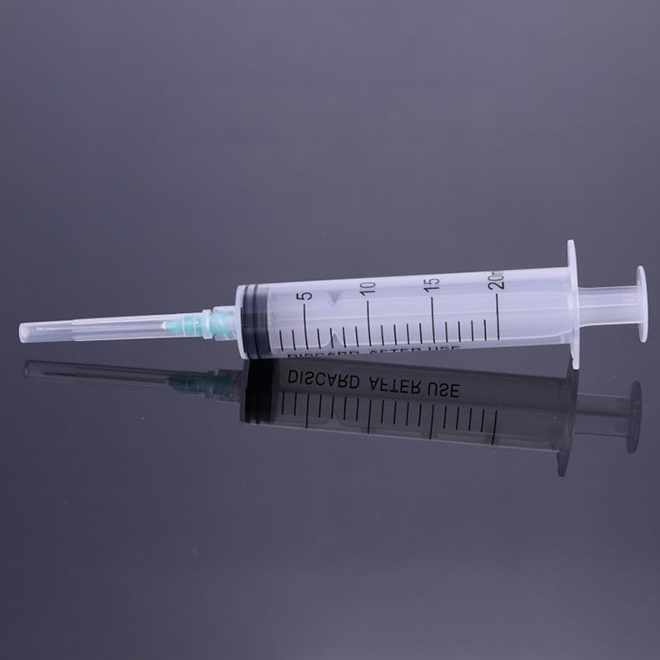
Key Takeaways
The slip version connects through a simple push-fit cone, which makes attachment quick but leaves the joint held by friction alone.
The luer lock version adds a threaded collar that screws onto the needle or tubing hub, giving a firmer, leak-resistant joint.
Catheter tip syringes carry a wider tapered nozzle for irrigation and tubing work, while ENFit connectors are reserved for enteral feeding under ISO 80369-3.
ISO 80369-1:2025, the third edition of the small-bore connector standard published in October 2025, promotes non-interconnectable designs so devices for different clinical uses cannot be joined by mistake.
Why Syringe Connector Standards Matter
In healthcare terminology, a small-bore connector is any narrow fitting that carries liquids or gases between a medical device and the patient. Because injection syringes, IV lines, feeding tubes and blood-pressure cuffs all rely on narrow fittings, a wrong join can send nutrition into a vein or medication into a feeding tube. Regulators describe these events as misconnections, and they remain a long-standing patient-safety concern.
The international response is the ISO 80369 series. Part 1, revised in 2025 as the current ISO 80369-1:2025 standard, defines general requirements and lists application fields such as respiratory, enteral, limb cuff inflation, neural and intravascular or hypodermic use. The standard assesses whether connector shapes are inherently non-interconnectable, meaning two fittings intended for different purposes physically cannot mate. Part 2 of the series addresses conical luer-type fittings themselves, while later parts assign dedicated shapes to enteral, neuraxial and other applications. A regulatory guidance document from the United States on small-bore connector misconnections applies the same logic and describes the two classic luer joinings: a push-fit cone called a luer slip and a screw-fit version called a luer lock.
The Four Connector Types at a Glance
What Is a Luer Slip Syringe?
A luer slip syringe has a smooth tapered nozzle; the needle or tubing hub slides straight on and holds by friction. Assembly is fast and intuitive, which suits high-volume, short-duration tasks such as subcutaneous and intramuscular injection, vaccination campaigns and laboratory sampling. The trade-off is that a pull or twist on the tubing can part a slip joint, so published practice keeps slip fittings for low-pressure, momentary use. Manufacturer listings for this family typically run from 1 ml up to 100 ml, as seen in published slip-fitting catalogues.
What Is a Luer Lock Syringe?
A luer lock fitting keeps the same tapered cone but adds a rotating collar with an internal thread. The needle hub or transfer tubing is inserted first, then twisted so the thread grips it, producing a positive mechanical lock that resists pull-off and leakage. That makes a luer lock syringe the customary choice for intravenous push, viscous medicines, repeated connections and any line that stays assembled for a while. Sizes in this family usually span 1 ml to 60 ml; one luer lock product catalogue lists transparent barrels, SUS304 stainless steel needles and medical-grade polypropylene construction.
Catheter Tip Syringes
A catheter tip syringe replaces the 6 percent luer cone with a wider, more gradual taper. The enlarged tip seats into soft catheter funnels and irrigation ports, which is useful for wound irrigation, flushing tubing and bolus feeding through large-bore tubes. Because the taper differs from the luer cone, catheter tip fittings and luer fittings are not interchangeable; device labelling states which hub type each accessory expects. Dedicated catheter syringe designs are produced across small and large volumes for these tasks.
ENFit Connectors for Enteral Applications
ENFit is the enteral connector defined by ISO 80369-3. Its geometry is deliberately reversed relative to luer fittings, so an enteral syringe cannot be joined to an IV line or to a standard luer lock port, and nutrition or medicine goes only where it should. The industry group coordinating the ENFit transition reports that legacy enteral connectors have been phased out of production in several markets with regulator support, although adoption continues at different speeds by region. Enteral feeding syringe options built around this fitting are now a standard part of hospital and home-care supply.
Explore Published Connector Specifications
Product pages for each connector family list sizes, materials and sterilisation details that procurement teams can check against local requirements.
Matching the Connector to the Application
Selection usually follows four questions: how much pressure the line sees, how viscous the fluid is, how long the joint stays assembled, and what happens if the wrong device is connected. Short, low-pressure injections tolerate a slip fit; pressurised or long-dwelling lines call for a threaded lock; irrigation and tubing work favour a catheter tip; anything entering a feeding tube belongs on an ENFit fitting. Where an incorrect connection could reach the bloodstream, standards committees encourage non-interconnectable fittings over adaptors.
Assembly habits matter as much as fitting choice. The joint should be checked with a gentle traction test after connection, threaded collars should be tightened by hand until resistance is felt, and any hub that shows cracking, discoloration or residue should be discarded. Single-use devices are not designed for reprocessing, and repeated autoclaving of polypropylene barrels degrades the cone surface that makes a slip joint hold.
Luer Lock Syringe vs Luer Slip Syringe: Side-by-Side Comparison
The table below collects the practical differences, with size and material figures drawn from manufacturer-published catalogue pages.
| Feature | Luer Slip Syringe | Luer Lock Syringe |
|---|---|---|
| Joining method | Push-fit friction cone | Threaded screw collar |
| Resistance to pull-off and leakage | Relies on friction alone | Positive mechanical lock |
| Published size range | 1 ml to 100 ml | 1 ml to 60 ml |
| Typical applications | Vaccination, laboratory sampling, short subcutaneous injections | Intravenous push, viscous medicines, long-dwelling lines |
| Barrel and gasket materials | Medical-grade polypropylene or PC; latex, latex-free or butyl rubber gasket | Medical-grade polypropylene; medical silicone lubricant |
| Sterilisation | Ethylene oxide, per published product pages | Ethylene oxide, per published product pages |
Both families share the same cone geometry, so a threaded hub can still seat loosely on a slip nozzle if the collar is left unthreaded. Inspecting the finished joint before injection is therefore part of routine practice with either fitting.
Examples from each family illustrate how these specifications appear in supplier catalogues.
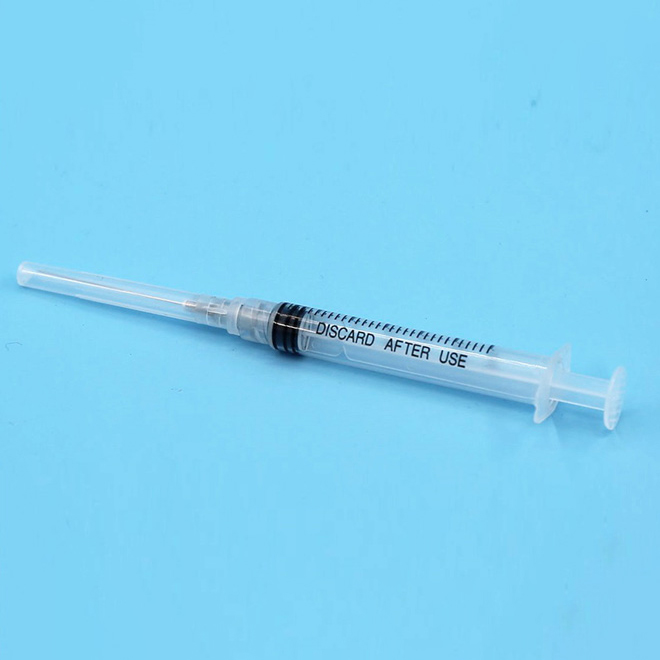
3ml Luer Lock Syringe with Needle
Threaded collar, SUS304 stainless steel needle and polypropylene barrel, supplied sterile for single use.
View Product
5ml Luer Slip Medical Disposable Syringe without Needle
Smooth slip cone in medical-grade polypropylene with clear graduations, supplied sterile without a needle.
View ProductRequest Documentation or Pricing
Specification sheets, catalogue pages and inquiry channels are reachable through the manufacturer's own site.
Conclusion
Luer slip, luer lock, catheter tip and ENFit answer different safety questions rather than competing on a single scale. Slip fittings buy speed; threaded locks buy security; catheter tips buy compatibility with soft tubing; ENFit buys separation between feeding and vascular pathways. Reading the fitting on both ends of a connection, and matching it to the intended clinical field under the ISO 80369 framework, remains a dependable selection method.
For readers comparing luer lock syringe and luer slip syringe manufacturers, Holinx provides published specifications, technical documentation and direct inquiry channels for further evaluation.
FAQ
Can a luer slip syringe be turned into a luer lock connection with an adaptor?
Adaptors exist, but they add an extra joint and sit outside the non-interconnectability logic of the ISO 80369 series. Where a threaded connection is required, purpose-built lock fittings are the simpler and safer route.
Why can an ENFit syringe not connect to a luer lock port or IV line?
ENFit is defined by ISO 80369-3 with reversed geometry, so the fittings physically do not mate. The design goal is to keep enteral nutrition or medicine out of vascular lines, a misconnection that regulatory guidance treats as capable of severe harm.
Which connector is appropriate for enteral feeding?
An ENFit fitting on a dedicated enteral syringe. Regulatory guidance encourages these non-interconnectable connectors for enteral applications and discourages legacy luer-based feeding fittings.
What volume ranges do luer slip and luer lock syringe products cover?
Manufacturer-published listings show luer slip syringe sizes from 1 ml to 100 ml and threaded-lock sizes from 1 ml to 60 ml. Actual availability varies by market and model.
Is a catheter tip syringe interchangeable with a luer slip fitting?
No. The tapered catheter tip is wider than the luer cone, so hubs made for one shape do not seat properly on the other. Devices and accessories should be matched to the tip shape stated on their labelling.
References and Notes
Small-bore connectors standard, ISO 80369-1:2025 third edition — connector families, non-interconnectability methodology and application fields (iso.org, accessed 2026-11-16)
Safety considerations for small-bore connectors in enteral applications, guidance for industry — luer slip and luer lock definitions, misconnection risk and enteral connector recommendations (fda.gov, accessed 2026-11-16)
ENFit enteral connector adoption and legacy connector phase-out — ISO 80369-3 transition status coordinated by the supplier association (stayconnected.org, accessed 2026-11-16)
Data notes: size ranges, barrel and gasket materials, needle specification and sterilisation method are manufacturer-published figures taken from the luer lock and luer slip product category pages of holinx.com (November 2026); connector geometry descriptions follow the ISO and FDA documents cited above. Slip-fitting suitability for low-pressure use and the cone geometry comments reflect industry-general practice.