




Insulin Syringe Sizes: How to Choose the Right Size for Your Situation
 Apr 01, 2026|
 View:2933
Choosing the correct insulin syringe is more than just a routine medical purchase; it is a critical part of diabetes management. Using the wrong size can lead to inaccurate dosing, discomfort, or even dangerous health complications.
For many patients, the pharmacy counter presents a confusing array of numbers—0.3ml, 0.5ml, 1.0ml, 30 units, 50 units, 100 units. How do you know which one is right for your daily needs?
At Holinx, a leading manufacturer of disposable medical devices, we believe that education is the first step toward effective treatment. This comprehensive guide will walk you through everything you need to know about insulin syringe sizes. By the end, you will feel confident in selecting the perfect syringe to match your prescription, your body, and your lifestyle.
Key Takeaways
Match Capacity to Dose: Always choose an insulin syringe that can hold your largest prescribed dose, but avoid going too large, as smaller barrels are easier to read accurately.
Needle Gauge Matters: Thinner needles (higher gauge numbers like 31G or 32G) generally offer less pain but require more pressure to inject.
Readability is Safety: If you take half-units (e.g., 12.5 units), you must use a syringe marked with half-unit lines.
Single Use Only: Modern insulin syringes are sterile and designed for one-time use. Reusing them blunts the needle and risks infection.
Consult Your Doctor: Always verify the size with your healthcare provider before switching insulin syringe types.

Part 1: Decoding Insulin Syringe Sizes (Volume & Capacity)
The most common source of confusion is the relationship between milliliter (ml) volume and "units" of insulin. In the diabetes world, U-100 insulin (the standard concentration in most countries) means 1 ml contains 100 units of insulin.
Therefore, the size of the barrel dictates exactly how many units you can draw.
| Barrel Volume | Maximum Units | Best For (Dose Range) |
| 0.3 ml | 30 units | Low doses (1 to 30 units) |
| 0.5 ml | 50 units | Medium doses (31 to 50 units) |
| 1.0 ml | 100 units | High doses (51 to 100 units) |
The "Smallest Syringe" Rule
When selecting an insulin syringe, the golden rule is: Use the smallest syringe that can hold your largest dose.
Why? A 0.3ml insulin syringe has markings that are physically further apart than a 1.0ml syringe. This makes it much easier to see exactly where the plunger is, reducing the risk of drawing 14 units instead of 12.
Example: If your dose is 28 units, do not buy a 1.0ml syringe just to "have room." The 0.3ml syringe is the correct choice because it gives you clear lines. However, if your dose is 28 units but your doctor says you may increase to 35 units soon, buy the 0.5ml syringe.
Part 2: Needle Specifications (Gauge & Length)
While the barrel holds the medicine, the needle delivers it. You will see two numbers on your insulin syringe packaging (e.g., 29G x 12.7mm or 31G x 8mm).
Understanding Gauge (Thickness)
The gauge refers to the thickness of the needle.
Lower Gauge (Thicker): 28G or 29G. These are stronger and draw oilier insulins faster, but may feel a "pinch."
Higher Gauge (Thinner): 31G or 32G. These are almost painless for most users but require slower injection pressure.
Holinx Insight: Our manufacturing process uses medical-grade SUS304 stainless steel to ensure that even high-gauge needles remain sharp and burr-free for a smooth injection.
Understanding Length
Short (4mm to 6mm): These are the current standard. They are long enough to reach subcutaneous tissue but short enough to avoid intramuscular injection, even for children.
Long (8mm to 12.7mm): Older standard or used for patients with significant adipose tissue. Note: If you use a long needle, you often must "pinch" the skin to avoid hitting the muscle.
Recommendation: Unless your doctor specifically prescribes a long needle, start with a 4mm or 6mm needle on your insulin syringe for comfort and safety.
Part 3: Incremental Markings (Whole Units vs. Half Units)
This is the most overlooked safety feature of the insulin syringe. Look closely at the barrel lines.
Whole Unit Syringes
Markings: Every line equals 1 unit. Every 5th or 10th line is numbered.
Best for: Adults taking doses rounded to the nearest whole number (e.g., 10, 24, 37 units).
Risk: You cannot accurately measure a half-unit (e.g., 12.5 units) with this syringe.
Half Unit Syringes
Markings: Every line equals 0.5 units. There are double the lines.
Best for: Children, seniors, or anyone on a sensitive dosing regimen requiring precise titration (e.g., 5.5 units, 18.5 units).
Availability: Typically found in 0.3ml and 0.5ml sizes.
Pro Tip from Holinx: If your vision is poor, a 0.3ml whole-unit insulin syringe has the largest, boldest lines. If you need half-units but have vision issues, ask about magnifying aids for your syringe.
Part 4: Step-by-Step Guide to Choosing Your Size
To make this practical, follow this decision flowchart using your actual prescription.
Step 1: Identify your daily maximum dose. Write down the highest number of units you inject in one sitting.
Step 2: Match the Barrel.
1 to 30 units → 0.3ml Insulin Syringe
31 to 50 units → 0.5ml Insulin Syringe
51 to 100 units → 1.0ml Insulin Syringe
Step 3: Do you need half-units?
Yes → Search for "Half-unit marking insulin syringe."
No → Standard whole-unit markings are fine.
Step 4: Select the needle.
Standard preference: 31G x 6mm (thin and short).
Higher body mass index (BMI) or thick skin: 29G x 8mm or 12.7mm.
Step 5: Check the brand quality.
Ensure the insulin syringe is sterile, latex-free (if you have allergies), and EO gas sterilized. Manufacturers like Holinx ensure that every syringe is pyrogen-free and DEHP-free for patient safety.
Comparative Data Table: Which Insulin Syringe Fits Your Life?
| Patient Profile | Daily Dose | Needle Preference | Recommended Insulin Syringe | Why? |
| Child (Petite) | 4.5 units | 32G x 4mm | 0.3ml / Half-unit | Prevents intramuscular shot; allows precise 0.5 increments. |
| Adult (Standard) | 22 units | 31G x 6mm | 0.3ml / Whole-unit | Easy to read large markings; comfortable thin needle. |
| Adult (High Dose) | 65 units | 29G x 8mm | 1.0ml / Whole-unit | Fills dose in one draw; thicker needle speeds up injection. |
| Senior (Arthritis) | 34 units | 30G x 8mm | 0.5ml / Whole-unit | Larger barrel than 0.3ml but not as bulky as 1.0ml; easier grip. |
Why Quality Control Matters
When dealing with a medical device like an insulin syringe, "cheap" can be dangerous. As an experienced manufacturer (Holinx), we emphasize that a quality syringe must have:
A smooth plunger: No sticking or jerking, which causes dose errors.
A laser-sharp needle: Electro-polished to reduce friction drag on the skin.
Clear, permanent markings: The scale should never fade or wipe off.
Low-quality syringes often have "dead space" (wasted insulin) or blunted needles that cause bruising. Always choose a certified supplier (ISO 13485, CE) to ensure your insulin syringe meets Class IIa medical device standards.
Frequently Asked Questions (FAQ)
Q1: Can I reuse my insulin syringe to save money?
A: No. Holinx strongly advises against this. Reusing an insulin syringe blunts the needle (causing pain and scar tissue), risks contamination, and the silicone coating degrades, leading to inaccurate dosing. Once is enough.
Q2: My dose is 30 units exactly. Should I use a 0.3ml or 0.5ml syringe?
A: Use the 0.3ml insulin syringe. The plunger will sit at the very end, but the markings are larger and easier to read precisely for a 30-unit draw. A 0.5ml syringe would work, but the 0.3ml is safer for accuracy.
Q3: What does "U-100" mean on my insulin syringe box?
A: U-100 means the insulin is concentrated at 100 units per 1ml. Standard insulin syringe sizes (0.3ml, 0.5ml, 1.0ml) are specifically calibrated for U-100 insulin. Do not use these syringes for U-500 (concentrated) insulin unless explicitly directed by a doctor.
Q4: How do I read half-unit markings on a 0.3ml syringe?
A: Look closely at the barrel. Between the "1" and "2" there will be a small line. That line is 1.5 units. The space between "1" and that line is 0.5 units. If you need 3.5 units, you draw the liquid to the small line after the "3."
Q5: Are there insulin syringes for pets (dogs/cats)?
A: While the hardware is similar, veterinary doses are often very small. Always check with your vet. However, many owners successfully use a 0.3ml half-unit insulin syringe for small pets because it allows for tiny, precise adjustments.
Conclusion
Selecting the right insulin syringe size is a balance of volume, needle comfort, and visual clarity. By matching the barrel size to your dose, choosing the appropriate gauge for your skin type, and verifying the increment markings, you take control of your therapy.
Remember that quality matters. When you purchase an insulin syringe from a reputable manufacturer like Holinx, you are investing in sterile, accurate, and reliable medical care. Always consult your pharmacist or doctor before changing your syringe size, and never compromise on safety for cost.
Have you found the right fit? Visit Holinx to explore our range of high-quality disposable insulin syringes designed for clarity, comfort, and precision.
Recommended Products
0.5ml 1ml 2ml Injection Disposable Safety Sterile Injection Medical Insulin Syringe
Medical Disposable Insulin Injection Syringe with Needle for Diabetic
Disposable Insulin Medical Injection Plastic Syringe with Hypodermic Needle
Disposable Medical Sterile Colored Insulin Syringe with Orange Cap
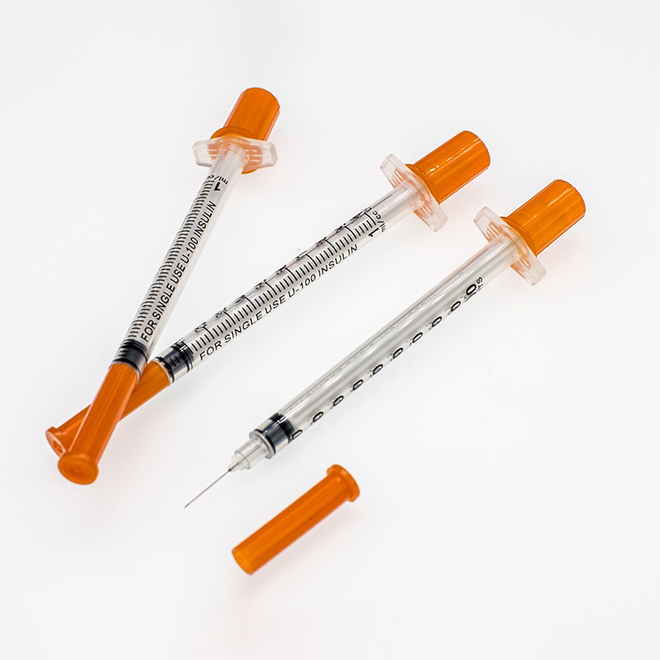
Sterile Disposable Insulin Syringe
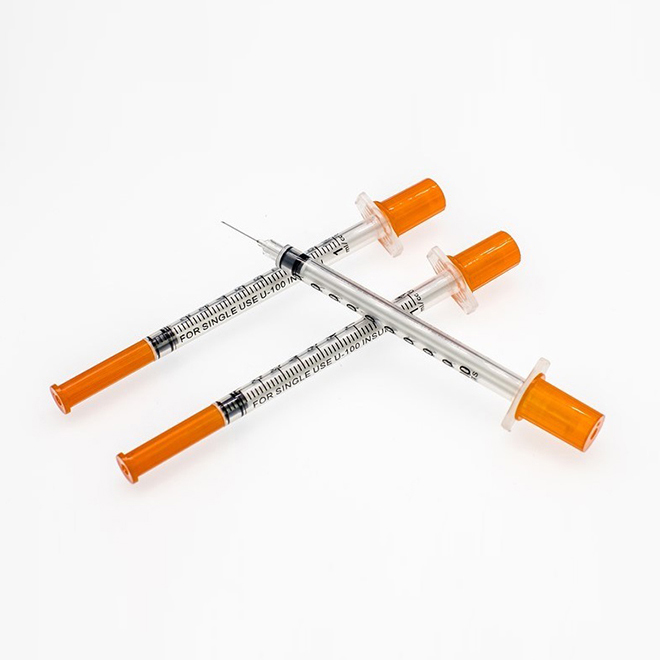
Disposable insulin syringe 1ml
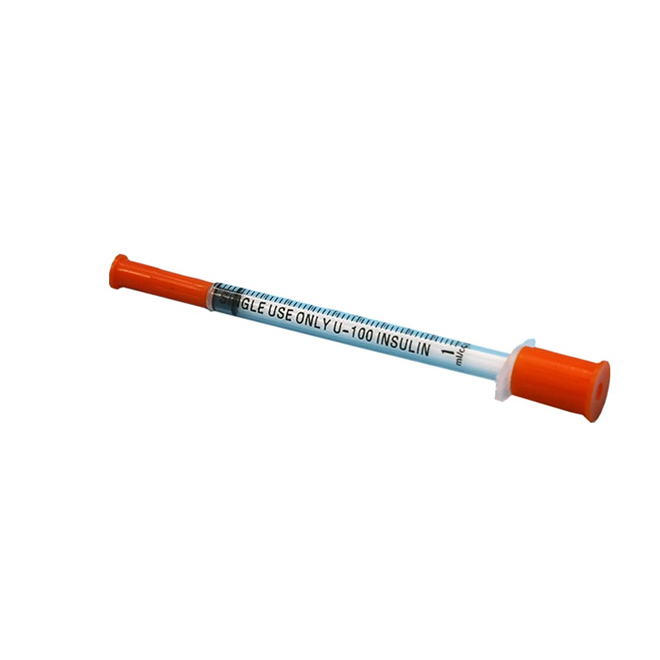
CE Medical Disposable Sterile Injection Plastic Insulin Syringe Safety Single Use
Recent News
1.Choosing the Right Luer Lock Syringe Size: A Practical Guide for Healthcare Settings
2026-03-272.Top 10 Luer Lock Syringe Manufacturers in Philippines 2025
2025-11-243.Top 10 Disposable Syringe Manufacturers in 2025
2025-10-214.What is a Luer Lock Syringe Used For?
2025-09-295.What is the Difference Between a Luer Lock Syringe and a Normal Syringe?
2025-09-256.Top 10 Luer Lock Syringe Manufacturers in India 2025
2025-09-227.Exploring the Use and Benefits of Luer Lock Syringes
2026-06-308.What is a luer slip syringe used for?
2025-07-07