




How to Choose the Right 1 mL Syringe for Your Needs
 Sep 21, 2026|
 View:
View:
Three factors help you make a good choice about a 1 ml syringe: intended use, needle and size specifications, and syringe features. You pick one by matching these factors to your task. An insulin injection needs different specs than a lab measurement or a tuberculin skin test. Each task has its own needs for volume markings, needle gauge, and connection style. This guide splits the process into simple steps. You will learn how to think about each factor and pick the right type of syringe. The next sections go through each step one by one.
Key Takeaways
Pick the syringe type that fits your task: insulin, tuberculin, or general use.
Choose the correct insulin syringe size for your dose in units.
Pick the needle gauge and length that make you comfortable and let the medicine flow well.
Choose between luer lock and luer slip connections for safety or speed.
Before you buy, check that the syringe is sterile and has certifications like CE, FDA, or ISO.
Select the Right Type of Syringe for Your Application
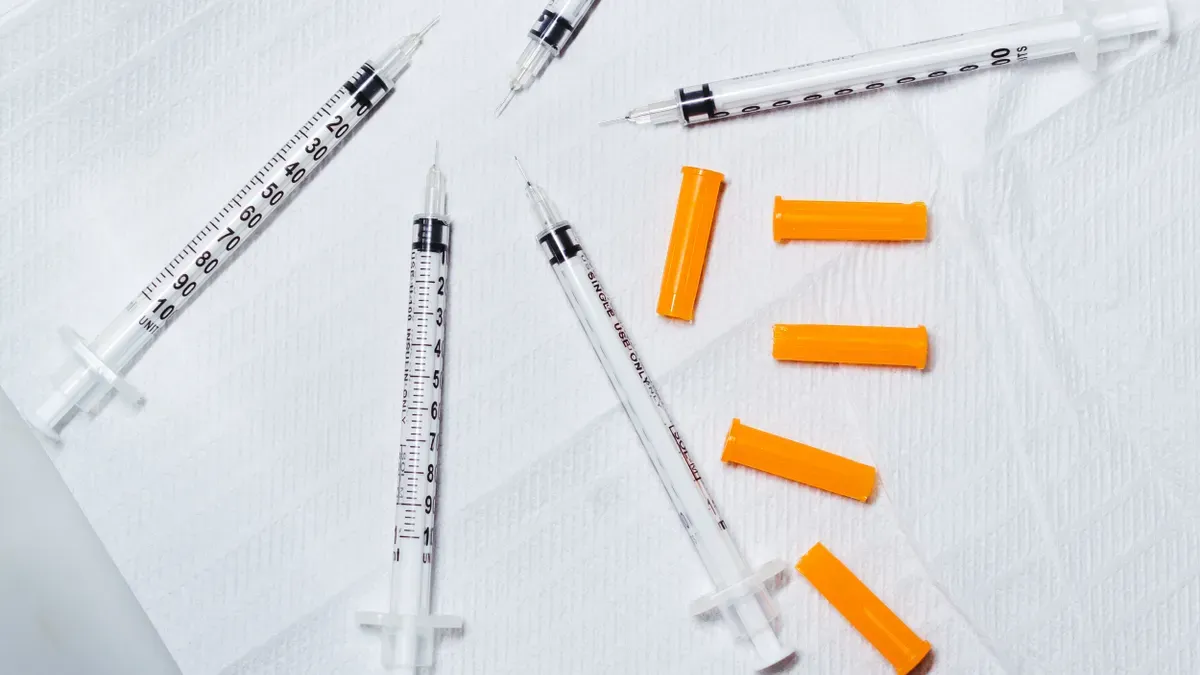
The most common uses for a 1 ml syringe are diabetic injections, tuberculin skin tests, and intradermal injections. Each task needs a different type of syringe. Tuberculin syringes give better accuracy for skin testing. Insulin syringes focus on accuracy for small doses.
For Insulin and Tuberculin Medications
You make a key decision when you pick between insulin syringes and tuberculin syringes. Dead space is a big difference. A standard tuberculin syringe with a removable needle holds about 0.07 mL to 0.15 mL of dead space. A standard insulin syringe with a built-in needle has almost no dead space. This difference matters for small doses. At a 0.1 mL dose, 0.1 mL of dead space means you lose all of the dose. That is why makers designed insulin syringes with fixed needles. They get rid of the dead-space variable. Some tuberculin syringes now have built-in needles or low dead-space hubs. Always look at the product spec sheet, not just the label.
Needle gauge also helps you decide which syringe to use. Standard intradermal injections with 1 mL syringes use 25G to 26G needles. Tuberculin syringes use 26G to 27G needles for the same purpose.
For Lab and General Use
Lab and home users need a general-purpose syringe. These often come without a needle. You may need extra marks for measurement. Syringe barrels have a scale for volume and dosing. The smallest lines on a 1 mL syringe usually stand for 0.1 mL or 0.01 mL. These marks differ between syringe sizes and brands.
Accuracy standards are important for lab work. ISO 7886-1:2017 sets tolerance at plus or minus 1.5% of the marked volume plus 2% of the volume you push out for syringes under 5 mL. When you push out 50% or more of the marked volume, the tolerance is 5% or less. One study found that a 1 mL syringe gives 0.05 mL with a 32% error. At 0.1 mL, the error falls to 17%. At 0.2 mL, it goes down to 9.5%. These numbers show why the right syringe matters for small-volume work.
Determine the Right Insulin Syringe Size for Your Needs
Insulin syringes come in three common sizes: 0.3 mL, 0.5 mL, and 1 mL. Each size works for a different range of doses. To pick the right size, first know your dose. Use a 0.3 mL syringe for doses under 30 units. Use a 0.5 mL syringe for doses between 30 and 50 units. Use a 1 mL syringe for doses over 50 units. This matching helps keep your insulin dose correct.
Common Insulin Syringe Sizes and Measurement Precision
The marks on each barrel show how precise the syringe is. A 1 mL insulin syringe has marks every 2 units up to 100 units. A 0.5 mL syringe has marks every 1 unit. A 0.3 mL syringe has marks every 1 unit or even every 0.5 unit. When you compare sizes, the smaller barrel gives you finer detail. That is important when you need to measure small amounts exactly.
U-100 insulin holds 100 units per mL. This relationship stays the same no matter what liquid is in the barrel. On a U-100 1 mL syringe, 1 mL equals 100 units. The table below shows how volume matches units.
Volume (mL) | Units on U-100 Syringe |
|---|---|
1 mL | 100 units |
0.5 mL | 50 units |
0.25 mL | 25 units |
0.1 mL | 10 units |
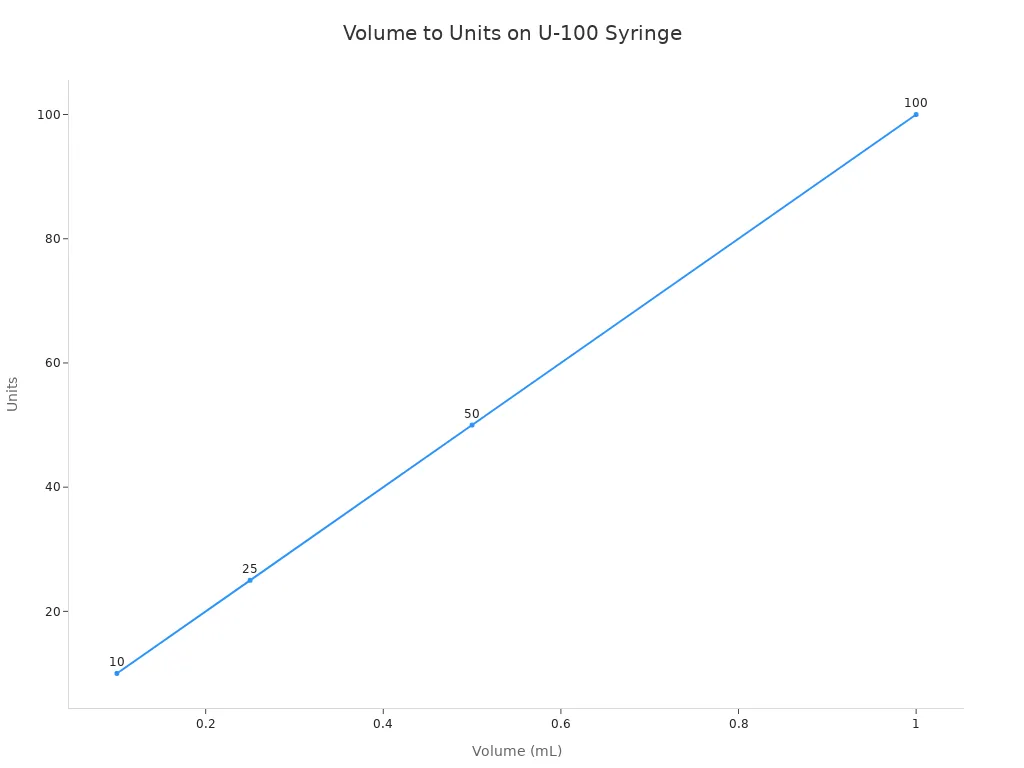
Always read the unit number, not the volume line. On a U-100 1 mL syringe, the 0.5 mL line is also the 50-unit line. If you read volume instead of units, you get the wrong dose. That mistake can hurt your insulin accuracy.
Could have markers for 2 units to make it simpler to read.
Understanding insulin syringe sizes also means matching the barrel to your insulin strength. A U-40 syringe has unit lines spaced differently than a U-100 syringe. Always use the syringe type that matches the insulin concentration on the vial.
Matching Gauge and Length to Medication
Needle gauge and length affect comfort and how the medicine goes in. Gauge means how thick the needle is. A higher gauge number means a thinner needle. Thinner needles hurt less. Thicker medications need a larger gauge so the liquid can flow.
Thick medications like testosterone need a wider needle. A 23-gauge, 1-inch needle is standard for testosterone shots. A 25-gauge, 1-inch needle also works and causes less scarring after many years. Needles above 25-gauge may work too, but it takes longer to draw up and inject.
For insulin, most pens and syringes use 29G to 31G needles. These thin walls keep injections comfortable. The right needle length and gauge depend on your body type and the depth of the injection site. A 1 mL syringe with a fixed needle keeps dead space under 5 microliters. That small leftover volume helps you dose accurately at tiny amounts.
Syringe type | Needle type | Residual dead-space volume |
|---|---|---|
Fixed-needle insulin syringe | 27G½" fixed needle | 1.3 μL ± 0.5 μL |
1 mL tuberculin syringe | 25G⅝" detachable needle | 7.5 μL ± 1.5 μL |
2 mL Noloss LDS syringe | 23G1¼" detachable needle | 17.8 μL ± 4.5 μL |
Fixed-needle insulin syringes hold much less liquid than detachable-needle types. This matters when you need to measure and inject insulin accurately. Choosing the right insulin syringe size for diabetes means matching barrel, needle, and dose. Looking at different insulin syringe sizes side by side shows how each one fits a different dose range. The right syringe size protects your insulin dose and your comfort.
Evaluate Key Features When Choosing a 1 ml Syringe
The way your syringe connects, its sterility, and its material all affect safety and performance. These features are what separate a good choice from a bad one.
Luer Lock vs. Luer Slip Connections
The tip connection decides how the needle or tubing joins the barrel. A luer lock tip has external threads. It locks tightly onto a matching piece. A luer slip tip uses a friction-fit design instead. You push it on and friction holds it in place.
Each design works best for a different workflow. The table below compares them.
Ergonomic Aspect | Luer Lock | Luer Slip |
|---|---|---|
Connection mechanism | External threads lock securely | Friction-fit design |
Speed of use | Slower to attach and detach | Faster, quick push-fit |
Security during use | Prevents leaks and disconnections | Not ideal for high-pressure situations |
Handling features | Large ergonomic finger grips | Easier to assemble and disassemble |
Best-fit workflow | High-pressure transfers, viscous materials | Low-pressure setups, quick transfers |
A luer lock tip gives you a secure connection. It lowers the chance of the needle coming off while you use it. That matters for procedures that need more force or movement, like injections into dense tissues. A slip tip is easier to put on and take off. It works well for quick, routine administrations. Your choice comes down to balancing security against convenience and speed for the specific procedure.
Sterility, Material, and Trusted Brands
Sterile, single-use syringes are a must for medical applications. Reused or non-sterile devices risk infection and cross-contamination. The FDA requires an SAL of 10^-6 for devices that touch normally sterile areas of the body. That means fewer than one viable microorganism per one million sterilized units.
Ethylene oxide (EO) sterilization works well for heat-sensitive polymers. It runs at low temperatures of 30–60°C. This stops deformation, aging, or release of harmful substances in polypropylene syringes. It keeps seal integrity and smooth plunger movement. Gamma radiation causes chain scission in polypropylene, making the polymer brittle. High-temperature methods such as autoclaving at 121–134°C cause creep in polypropylene and polyethylene. That distorts barrel calibrations and ruins dose accuracy. EO residues can be controlled. They drop to safe levels below 10μg/g per FDA standards after 48–72 hours of aeration.
When you buy a 1ml syringe, check the certifications. Brands like Holinx (鸿林翔) offer EO-sterilized 1 ml disposable syringes with CE, FDA, and ISO certifications. They also provide customizable packaging and specifications. CE certification confirms a medical device meets the safety, performance, and regulatory requirements of the EU Medical Device Regulation (EU MDR 2017/745). CE marking is mandatory before a device can be legally sold in the EU/EEA. Manufacturers must show product safety, clinical performance, risk management, quality management compliance, and post-market surveillance capability. Key requirements include an ISO 13485-compliant quality management system, technical documentation, clinical evaluation, risk management per ISO 14971, and post-market surveillance.
For disposable medical devices, the CE mark is not required to be printed directly on the device itself. For single-use, disposable devices, the CE mark only has to be on the labeling.
That detail matters when you check packaging. Look for the CE mark on the label, not the barrel. The right type of syringe for your task combines the correct connection, proven sterility, and trusted certification. The right type of syringe protects both you and your patient.
You now have a clear path. First, match the type of syringe to your task. Second, pick the right insulin syringe size and needle gauge. Third, check features like luer lock or slip and sterility. Ask yourself three quick questions. Is this for insulin, tuberculin, or general use? What volume and needle gauge do you need? Do you require a lock or slip tip? When you buy a 1 ml syringe, verify certifications. Look for ISO 13485 for quality management, ISO 594-2 for luer lock threads, and ISO 10993 for biocompatibility. Holinx holds these marks. Visit the product page or contact a supplier for advice.
FAQ
What needle sizes work with a 1 mL syringe?
Most 1 mL syringes use standard hub needles. Insulin models have fixed 29G to 31G needles. Tuberculin types use 25G to 27G needles. Lab versions with luer tips accept various gauges and lengths.
How do you know if a 1 mL syringe is sterile?
Look for an EO sterilization indicator on the packaging. Check for a sterile expiry date. Verify certifications like CE, FDA, or ISO on the label. These marks confirm the syringe meets safety standards.
What is the difference between luer lock and luer slip connections?
On your 1 mL syringe, a luer lock tip has threads that twist the needle into place. A luer slip tip uses friction to hold the needle. Use a lock for high-pressure work. Use a slip for quick tasks.
Why does dead space matter for small doses?
Dead space traps medication inside the hub after injection. A fixed-needle insulin syringe holds under 5 microliters. A detachable-needle type holds up to 15 microliters. This loss matters most at doses below 0.2 mL.